
Examples of Faculty Development & Support From VISTA
How are faculty recruited and trained in SDSU-VISTA?
Interviews

In the SDSU VISTA program, new faculty are typically interviewed by both the home department and the VISTA team. For faculty who already teach at the University, interviews take place with just the VISTA team. Interviews include questions about goals, teaching style, and availability for this unique opportunity (including scheduling and travel).
Initial Steps
Once a faculty member is selected for the VISTA program and a class is identified, the VISTA team embarks on the process of requesting clearance for the faculty member and schedules the on-campus training to initiate the process of teaching in VISTA.
On-Campus Training

The VISTA team offers a two-hour training for new faculty that is typically co-led by a faculty member and someone with experience of incarceration (whether another faculty or a student). This training includes logistical elements such as what to expect when teaching in a prison, the clearance process, how to submit requests for supplies, as well as pedagogy, including an overview of trauma-informed teaching and engaged learning.
In-Prison Training
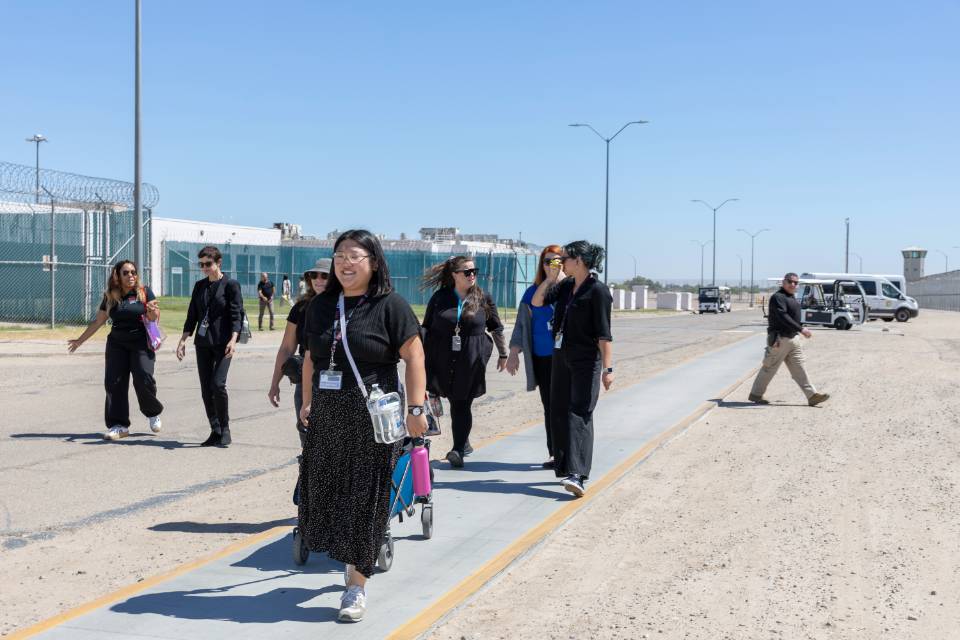
Once the on-campus training is completed, the VISTA team schedules the faculty to attend a training at the prison. In California, these trainings are offered to any volunteers or program providers going into the prison. They cover safety and security and regulations. VISTA recommends that faculty participate in this training after the on-campus training.
Ongoing Development
“For the practitioners I would say you are highly appreciated. I have a special place in my heart for everyone who contributed to the VISTA program because it has been transformational in my life. The work you all do is impactful and changing generations.”
Beyond the initial engagement, faculty in HEP programs are part of the culture. They are the students' touchstone to higher education. They are engaged in the program even further than faculty on the main campus and face challenges and obstacles beyond a regular teacher. Offering faculty in HEP opportunities for engagement and reflection can boost their experience and provide opportunities for mentoring and shared learning. Faculty learn from one another, support each other, and can be a listening ear and brainstorm partner.
Faculty Meetings and Engagement
VISTA holds monthly faculty meetings online where faculty come together in community to share ideas and gain insight and updates. Meetings might be logistical, such as sharing new guidelines on clearances and books; problem-solving, such as discussing how to address disagreement in a healthy way in online discussions; or celebratory, such as welcoming new team members, sharing ideas, or offering insights on the experience and what was learned.
Relevant trainings link from VISTA - TBD which resources to add